Imagine being the sole support agent for thousands of customers on a growing platform, personally handling every request. That was my partner's reality at a startup years ago. The sheer volume was overwhelming, but every interaction mattered to him, and he poured genuine care into crafting thoughtful, personalized responses for every single user.
Customers felt valued, but it came at a cost: long delays that led to frustration despite his best efforts. The pressure to speed up was constant, and leadership understandably wanted faster responses.
This is the dilemma many companies face: speed vs. care. Most companies, when faced with this situation, choose efficiency. They prioritize speed, churning through tickets as quickly as possible—but at what cost? Responses often feel generic, irrelevant, and devoid of empathy, leaving customers feeling processed rather than valued.
But my partner didn't want that. For him, the choice felt impossible: prioritize speed and risk losing the quality that made customers feel genuinely heard.
The Cost of Prioritizing Speed
As companies grow, the pressure to scale support becomes relentless. Efficiency takes center stage, with response times and ticket volumes often becoming the default metrics of success. But focusing too heavily on speed comes at a price.
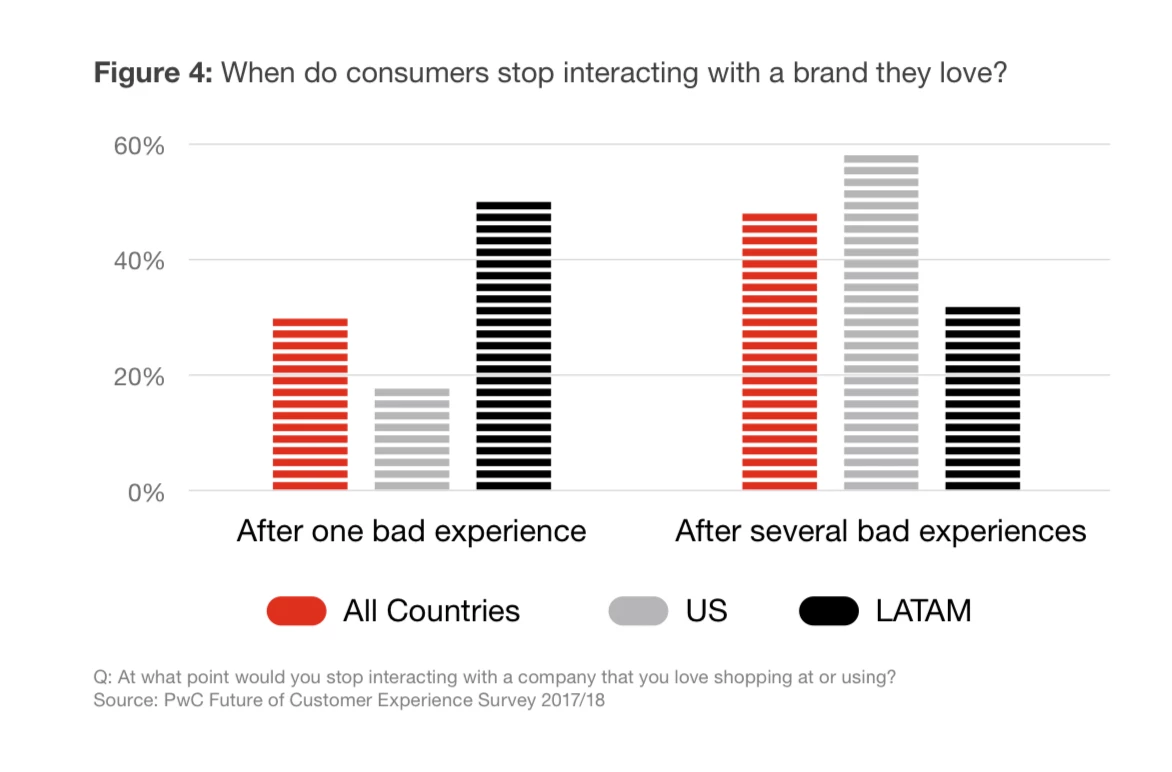
For customers, speed is only part of the equation. A quick response that misses the mark—or feels robotic—can be worse than waiting longer for a thoughtful, personalized reply. Research shows that 59% of U.S. consumers would walk away from a brand after multiple bad experiences, and 17% wouldn't even wait that long (source: PwC).
Sadly, the consequences extend beyond customers—they weigh heavily on support teams as well. When agents are pushed to prioritize speed, they often adopt a transactional mindset, delivering rushed, impersonal responses that lack connection. Over time, this churn leads to burnout and disengagement, making it even harder to provide the quality care that builds customer trust.
This disconnect between efficiency and care creates a larger issue. Many businesses track metrics like CSAT scores to measure customer sentiment, but the pressure to hit efficiency targets—like reducing response times or closing tickets faster—can make it easy to focus on what's most measurable. It's a balancing act, and when efficiency takes precedence, it often leaves teams unsure how to act on the deeper insights needed to foster meaningful connections.
The real challenge isn't just choosing between speed and care—it's finding a way to deliver both while supporting the people who make it happen.
Rethinking Automation—The Power of Compassionate Macros
Watching my partner handle the relentless volume of support requests alone, I realized the workload was unsustainable. Something had to change.
That's when I suggested macros. At first, he was hesitant. Macros, he explained, often feel robotic and impersonal—everything he wanted to avoid. But I saw their potential—not as a shortcut, but as a tool to ease the workload while still delivering meaningful interactions.
The challenge wasn't the tool itself, but how they're generally written. What if macros could reflect the same empathy and attentiveness as a personalized response? What if they could help deliver both speed and care?
So, I reframed macros—not as robotic, one-size-fits-all responses, but as adaptable templates designed to feel personal, empathetic, and human-like at scale. With care and intent, macros can be shaped with the same thoughtfulness as a one-on-one conversation. This shift in thinking led to the creation of Compassionate Macros—a system designed to deliver care at scale.
This idea brought me back to a story I heard years ago during training at Bell Canada through Kaset International. We studied Disney's renowned customer service practices, and one insight left a lasting impression: Disney attendants are trained to treat every guest as though they're the first person to ask a question—even if it's something they've heard a thousand times before, like "Where's the nearest washroom?" This approach ensured that every visitor felt seen and valued, no matter how routine the interaction.
I applied the same mindset to Compassionate Macros: templates crafted to deliver empathy and authenticity, even at scale. Each macro was written as though it were for a single person, preserving the empathy, thoughtfulness, and personality that defined his support. By incorporating dynamic fields—like the customer's name or specific details—these templates made every response feel truly personal.
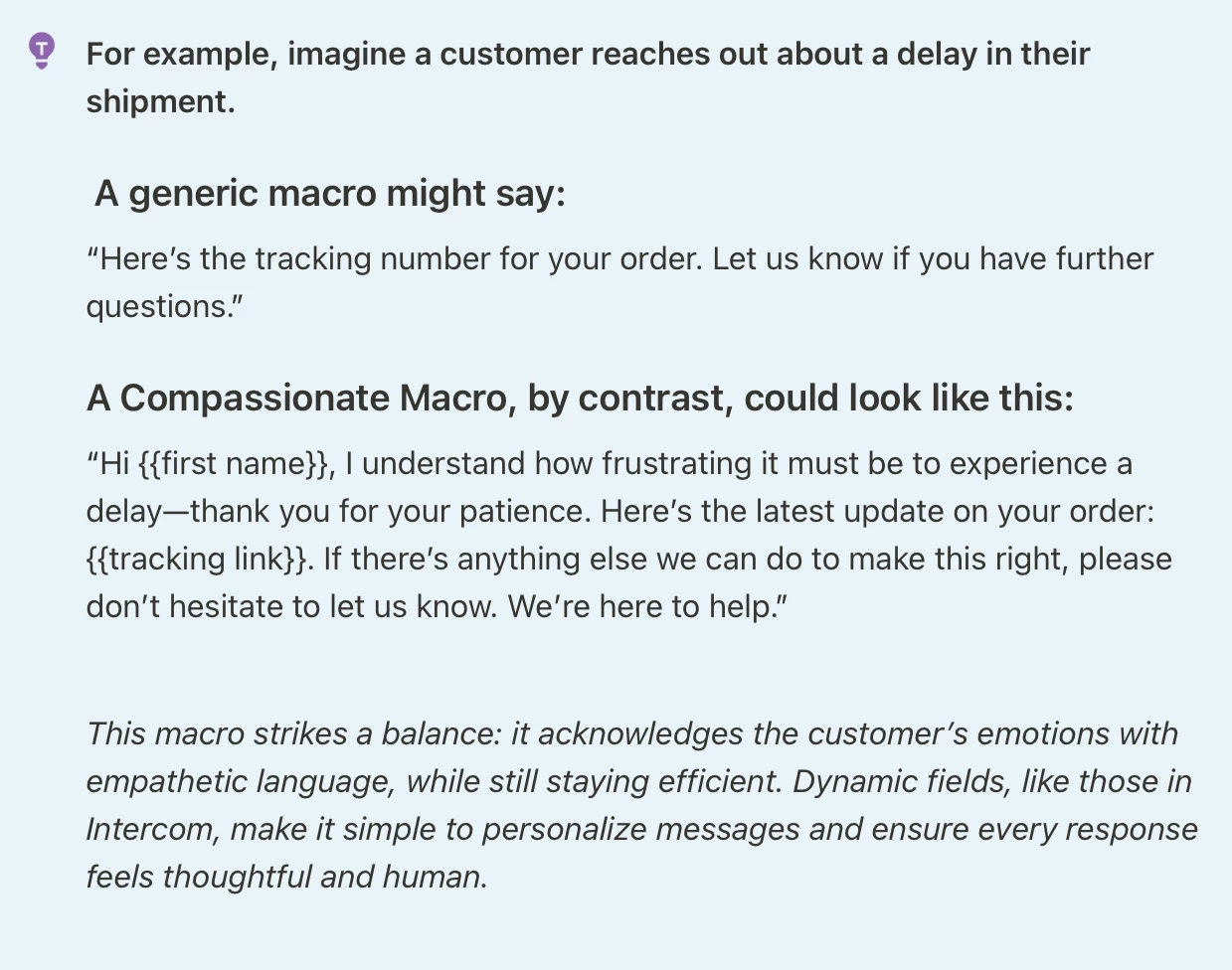
To bring this idea to life, I started by analyzing what made his best responses so effective. They were clear, deeply considerate, and personalized. The goal was to codify that thoughtfulness into a framework that maintained a human touch, even when reused.
Each template was flexible: it could be used as-is for quick replies or adapted to fit the nuances of specific situations. Together, we built a library that covered everything from billing queries to troubleshooting and feature requests—designed to make every interaction feel human and supportive.
What made this approach especially powerful was its ability to solve logistical challenges without losing the human connection customers value most. Compassionate Macros proved that care could scale without sacrificing trust, empathy, or loyalty.
For the team, it wasn't just a productivity boost—it showed that efficiency and human connection could coexist when approached with intention, creating benefits for everyone involved. When new team members joined, they found a robust library of Compassionate Macros ready to support them. These prebuilt templates not only provided immediate tools to help them handle customer inquiries but also served as a learning resource, showing them how to craft thoughtful, empathetic responses. This drastically reduced the learning curve for onboarding, empowering new hires to provide high-quality support right from the start.
So how did we go from an idea to a fully realized library of Compassionate Macros? Here are the key steps we followed to bring it to life.
Quick Tips: How We Built Compassionate Macros
- Identify Patterns and Dig Deeper: Start by surfacing the most common customer questions, but don't stop there. Look beyond what customers are asking to understand why they're asking it—this insight can help position your answers more effectively and even lead to better solutions.
Pro Tip: Pay special attention to tricky or uncommon scenarios where answers could vary between team members. Writing macros for these cases ensures everyone is aligned, so customers receive consistent, accurate information—even in nuanced situations. - Write for One, Scale for Many: Design every macro as if you're writing to a single person. Review previous replies on similar topics to create compassionate, adaptable templates that address customers' needs in the moment while staying flexible enough to help others in similar situations.
Pro Tip: When reviewing past responses, look for nuances in how you've answered similar questions in different contexts. Blending these insights into your macro allows you to preemptively address related challenges and offer a cohesive, next-level response. This not only saves time but also helps guide customers proactively, reducing follow-up questions. - Acknowledge Feelings: Show empathy by addressing the emotions behind the issue, not just the problem itself. Recognize what the customer is experiencing and reassure them that you're there to help. A thoughtful acknowledgment can go a long way in building trust and strengthening the relationship.
- Balance Efficiency with Care: Strive to keep responses clear, actionable, and concise, while ensuring they remain empathetic. Avoid overly formal or robotic language that might make customers feel dismissed, and instead focus on offering a solution while showing you understand their needs. A thoughtful balance of warmth and clarity can turn even routine interactions into meaningful experiences, fostering customer loyalty.
- Personalize the Response: Even if you're not using automation, include specific customer details like names, order information, or contextual details to show you've read their message. Personalization reassures customers that their concerns are understood, fostering a sense of acknowledgment and care.
Pro Tip: Mirroring the customer's language in your response can strengthen this connection. By reflecting the words or tone they use, your responses feel tailored and show that you're truly listening. - Make Macros Easy to Find: Use clear, searchable keywords in macro titles to make them accessible to your team. Include terms like "billing," "troubleshooting," or "onboarding," and add hashtags for even faster searchability.
- Update Macros Regularly: Periodically review your macro library for outdated content or gaps. Address recurring issues or emerging challenges with fresh templates to keep your library relevant and effective.
- Evolve Through Feedback: Regularly analyze macro performance by collecting team feedback, customer satisfaction scores, and efficiency metrics. Use these insights to refine tone, structure, and clarity, ensuring your macros stay relevant and impactful.
Pro Tips: Maximize Intercom's Tools for Meaningful Customer Connections
- Use Dynamic Fields for Personalization: Incorporate fields like {{first name}}, {{plan name}}, or {{product name}} to automatically personalize responses. These fields help tailor messages to each customer, ensuring every interaction feels specific and thoughtful.
- Leverage Custom Data Attributes: Incorporate subscription dates, order details, or other customer-specific data to refine responses further. These attributes help your team deliver empathetic, context-aware support.
By applying these principles and tools, we didn't just solve logistical challenges—we transformed the way we supported customers and our team.
Here's What We Achieved:
- Faster Responses: Compassionate Macros enabled us to resolve inquiries in seconds, cutting down on unnecessary back-and-forth and improving first response times.
- Even Happier Customers: Customers reported feeling valued and understood, even in routine exchanges, thanks to the thoughtful, empathetic tone baked into every response.
- Reduced Backlogs and Burnout: Standardizing responses to common and tricky scenarios helped us clear ticket backlogs and reduced the stress on our team, creating a healthier workflow.
- Freed Time for High-Value Work: By automating routine inquiries, we gave team members the time and space to focus on building stronger customer relationships and tackling complex issues.
- Empowered Team Members: The macro library became a reliable resource, helping team members confidently handle unfamiliar situations while maintaining consistency and care.
Compassionate Macros didn't just solve logistical problems—they proved that speed and care can coexist. By prioritizing thoughtful, scalable care, we showed that it's possible to build trust and connection at every stage of growth.
This journey revealed a larger truth: empathy isn't just a strategy—it's the foundation for transforming every part of the customer experience. Every interaction, no matter how small, matters.
These principles aren't just relevant—they're foundational. Thoughtful, personalized responses build trust and loyalty, whether they come from a team member or an AI system.
Tools like Compassionate Macros offer a blueprint for creating empathetic, consistent service that automation can amplify.
AI's effectiveness depends on the quality of its foundation—knowledge bases, macros, and frameworks rooted in care. By embedding empathy into these tools, businesses can ensure that as AI evolves, its outputs reflect the thoughtfulness of the people behind them.
Empathy-driven tools like Compassionate Macros show us what's possible when we prioritize thoughtful care—at scale. As businesses look to the future, the question becomes: how will you embed empathy into every interaction, ensuring that speed and care go hand in hand?
Back to all articles